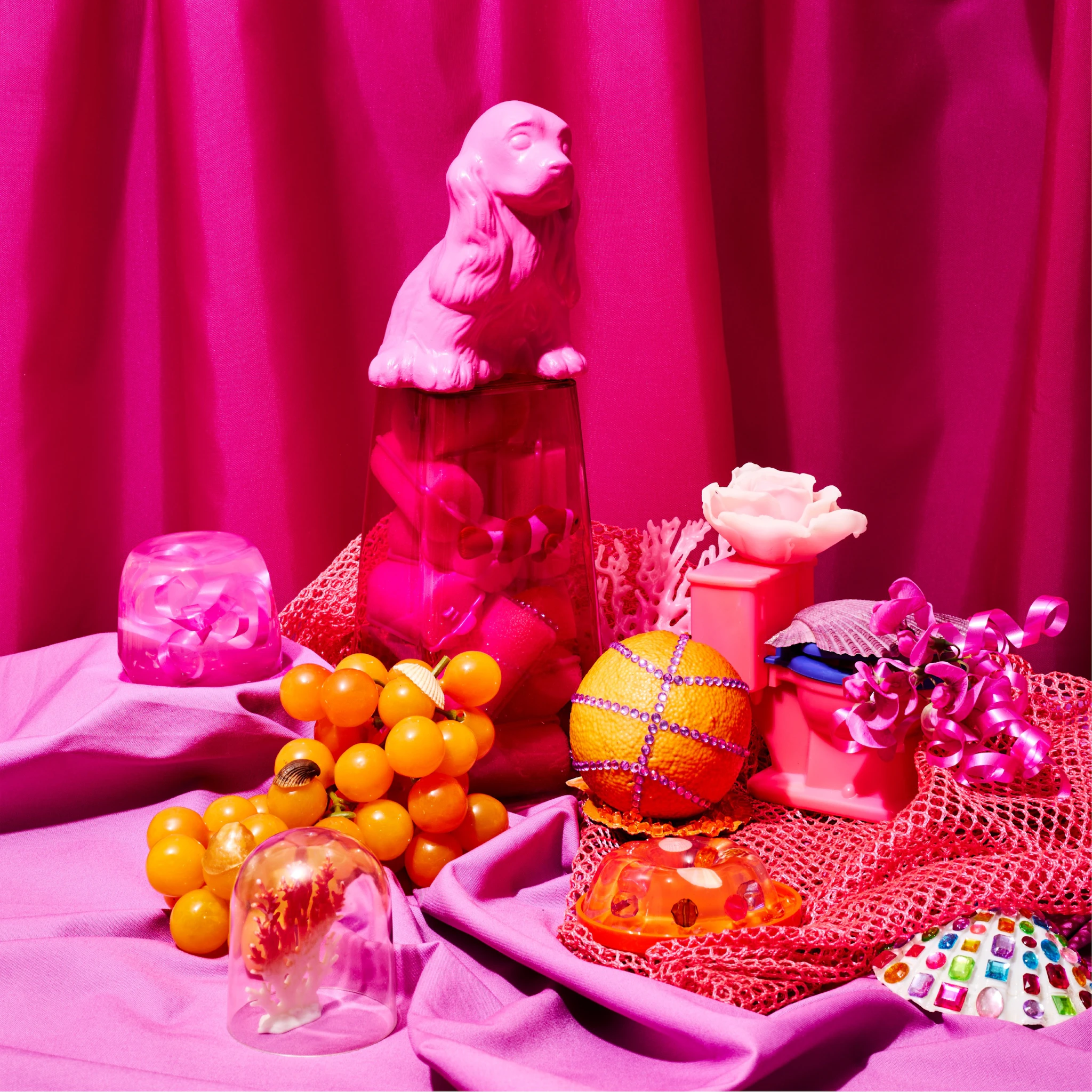
Maria Chávez, Odeya Nini, Zach Cooper - Repeat Until True: Triptych
Repeat Until True
- 1RUT1 (for Contrabass) - Zach Cooper
- 2RUT2 (for Contrabass) - Zach Cooper
- 3RUT3 (for Contrabass) - Zach Cooper
- 4RUT4 (for Contrabass) - Zach Cooper
- 5RUT5 (for Contrabass) - Zach Cooper
- 6RUT6 (for Contrabass) - Zach Cooper
- 7RUT1 (for Voice) - Odeya Nini
- 8RUT2 (for Voice) - Odeya Nini
- 9RUT3 (for Voice) - Odeya Nini
- 10RUT6 (for Voice) - Odeya Nini
- 11RUT Triptych1 (for Turntables) - Maria Chávez
- 12RUT Triptych2 (for Turntables) - Maria Chávez
GW003
•
Open edition
REPEAT UNTIL TRUE: TRIPTYCH
MARIA CHÁVEZ - Turntables
ODEYA NINI - Voice
ZACH COOPER - Contrabass, compositions
REPEAT UNTIL TRUE, for Contrabass by Zach Cooper (#1-6)
Produced by Zach Cooper & Adam McDaniel
Engineered by Adam McDaniel & Lawson Alderson
Recorded at Drop of Sun, AVL, January 2022
REPEAT UNTIL TRUE, for Voice by Odeya Nini (#7-10)
Produced by Zach Cooper & Lewis Pesacov
Engineered by Lewis Pesacov
Recorded at Ahata Sound, LA, June 2022
REPEAT UNTIL TRUE: TRIPTYCH, for Turntables by Maria Chávez (#11-12)
Produced by Zach Cooper, Maria Chavez & Andrew Fox
Engineered by Andrew Fox
Recorded at Astral Sound, NYC, t2023, 2025
Mixed and Mastered by Rachel Alina
Art Direction by Heidi Gruner
Photography by Whitney Ott
Liner Notes by Alec Sturgis
___________________
Melodic composition does not exist in the vacuum of a singular conteur of tones. Melody – whether coupled with complimentary and competing voices, or stated in its isolation – lives within a whole, harmonic world. It envoices the features of its own spectral series, produces a dialogue with silence, and lends a form for the unique listening of how musical dynamics, texture, and interpretive sensibility may produce variations – not of the same, but in novel transcendence and evolution of the same. In his 1968 monograph “Difference and Repetition,” Gilles Deleuze presents that “difference” is not merely a relation between two pre-existing identical entities, but something more fundamental: the basis or condition that produces uniqueness. And “repetition” – often thought of as repetition of the same – is not of the identical, but is an instance that actualizes that difference, its novelty and the uniqueness of difference in-itself.
Repeat Until True: Triptych presents a set of relationships between its three interpreters and a shared group of repeated melodic figures, expressed through an improvisational protocol by which the musician discovers their own deepening, novel sense of the difference each repetition evokes. This selection of six melodies (the poetic acronym of the title - “RUT” - is ascribed and numbered for each) has emerged from Zach Cooper’s exploration of such constrained, repeated phrases over the last near-decade. The featured compositions – RUT 1-6 (2017-2019) – represent the earliest stages of this method, which Cooper has since developed on a continual basis and through his artist residency at Lamplight AVL. Culminating with the addition of 40 new pieces in 2025, RUT is a growing collection for many possible interpretations and realizations. Beyond each melody, the series of compositions is defined within a constraining premise: “limit improvising to tonal, rhythmic, dynamic, textural, temporal, idiomatic, and syllabic procedures.” And, “do not improvise melodically.”
In dialogue with Cooper’s six RUT recordings of contrabass, the addition of sound artist/experimental turntablist Maria Chávez and interdisciplinary vocalist/composer Odeya Nini to this procedure creates an assembly of three profound variations in affect and approach that reflect the broad capability of Cooper’s work to contain radically different sonic possibilities. Cooper’s renditions (RUT1-6 for Contrabass) introduce his protocol with a grounded and contemplative tonal exposition. Layering string harmonics, pitched re-voicings and fluctuations of melodic temporality, the methodical sustain and interruption of intonations recall the Onkyōkei approach in deployment of texture and silence, as in the incredible guitar work of Taku Sugimoto. Having settled in the mesmeric sound of Cooper’s contrabass, Odeya Nini’s sequence for unaccompanied voice, which follows, pierces the established timbral space with a breadth of warm, textured sonority, and the controlled vocal formant which she artfully applies in a waxing and waning of otoacoustic hallucinations over the melodic phrase. Nini’s performance of the melodic group holds within it an almost cinematic abstraction, calling to mind a potency of image and sound on the order of composer Nino Rota’s most disarming landscapes for Fellini. In the final panel of this Triptych, the controlled and lucid fracture of Maria Chávez’s turntables subsume melody, voice and contrabass in two sonic aggregates of RUT. These impose their own expansive and haunting notions of melody - not so much as instances of a phrase, but as diffused into a sonic topology that folds tone into iteration and captures emergent voices in a bas-relief sculpture of refracting media.
Cooper’s Repeat Until True: Triptych, suggests to us the value of returning to a thought, a sense, a phrase, an approach; and, the confounding and enriching possibility of returning to ourselves in relation to that which seems fixed, but is forever different. In Deleuze, the adaptation of Nietzsche's “eternal return” points toward the idea that repetition for itself doesn’t mean a cyclical return to the same, but rather, is a continual and immanent return to the features of time and the life and voice that embodies it.
-Alec Sturgis
released December 1, 2025
MARIA CHÁVEZ - Turntables
ODEYA NINI - Voice
ZACH COOPER - Contrabass, compositions
REPEAT UNTIL TRUE, for Contrabass by Zach Cooper (#1-6)
Produced by Zach Cooper & Adam McDaniel
Engineered by Adam McDaniel & Lawson Alderson
Recorded at Drop of Sun, AVL, January 2022
REPEAT UNTIL TRUE, for Voice by Odeya Nini (#7-10)
Produced by Zach Cooper & Lewis Pesacov
Engineered by Lewis Pesacov
Recorded at Ahata Sound, LA, June 2022
REPEAT UNTIL TRUE: TRIPTYCH, for Turntables by Maria Chávez (#11-12)
Produced by Zach Cooper, Maria Chavez & Andrew Fox
Engineered by Andrew Fox
Recorded at Astral Sound, NYC, t2023, 2025
Mixed and Mastered by Rachel Alina
Art Direction by Heidi Gruner
Photography by Whitney Ott
Liner Notes by Alec Sturgis
___________________
Melodic composition does not exist in the vacuum of a singular conteur of tones. Melody – whether coupled with complimentary and competing voices, or stated in its isolation – lives within a whole, harmonic world. It envoices the features of its own spectral series, produces a dialogue with silence, and lends a form for the unique listening of how musical dynamics, texture, and interpretive sensibility may produce variations – not of the same, but in novel transcendence and evolution of the same. In his 1968 monograph “Difference and Repetition,” Gilles Deleuze presents that “difference” is not merely a relation between two pre-existing identical entities, but something more fundamental: the basis or condition that produces uniqueness. And “repetition” – often thought of as repetition of the same – is not of the identical, but is an instance that actualizes that difference, its novelty and the uniqueness of difference in-itself.
Repeat Until True: Triptych presents a set of relationships between its three interpreters and a shared group of repeated melodic figures, expressed through an improvisational protocol by which the musician discovers their own deepening, novel sense of the difference each repetition evokes. This selection of six melodies (the poetic acronym of the title - “RUT” - is ascribed and numbered for each) has emerged from Zach Cooper’s exploration of such constrained, repeated phrases over the last near-decade. The featured compositions – RUT 1-6 (2017-2019) – represent the earliest stages of this method, which Cooper has since developed on a continual basis and through his artist residency at Lamplight AVL. Culminating with the addition of 40 new pieces in 2025, RUT is a growing collection for many possible interpretations and realizations. Beyond each melody, the series of compositions is defined within a constraining premise: “limit improvising to tonal, rhythmic, dynamic, textural, temporal, idiomatic, and syllabic procedures.” And, “do not improvise melodically.”
In dialogue with Cooper’s six RUT recordings of contrabass, the addition of sound artist/experimental turntablist Maria Chávez and interdisciplinary vocalist/composer Odeya Nini to this procedure creates an assembly of three profound variations in affect and approach that reflect the broad capability of Cooper’s work to contain radically different sonic possibilities. Cooper’s renditions (RUT1-6 for Contrabass) introduce his protocol with a grounded and contemplative tonal exposition. Layering string harmonics, pitched re-voicings and fluctuations of melodic temporality, the methodical sustain and interruption of intonations recall the Onkyōkei approach in deployment of texture and silence, as in the incredible guitar work of Taku Sugimoto. Having settled in the mesmeric sound of Cooper’s contrabass, Odeya Nini’s sequence for unaccompanied voice, which follows, pierces the established timbral space with a breadth of warm, textured sonority, and the controlled vocal formant which she artfully applies in a waxing and waning of otoacoustic hallucinations over the melodic phrase. Nini’s performance of the melodic group holds within it an almost cinematic abstraction, calling to mind a potency of image and sound on the order of composer Nino Rota’s most disarming landscapes for Fellini. In the final panel of this Triptych, the controlled and lucid fracture of Maria Chávez’s turntables subsume melody, voice and contrabass in two sonic aggregates of RUT. These impose their own expansive and haunting notions of melody - not so much as instances of a phrase, but as diffused into a sonic topology that folds tone into iteration and captures emergent voices in a bas-relief sculpture of refracting media.
Cooper’s Repeat Until True: Triptych, suggests to us the value of returning to a thought, a sense, a phrase, an approach; and, the confounding and enriching possibility of returning to ourselves in relation to that which seems fixed, but is forever different. In Deleuze, the adaptation of Nietzsche's “eternal return” points toward the idea that repetition for itself doesn’t mean a cyclical return to the same, but rather, is a continual and immanent return to the features of time and the life and voice that embodies it.
-Alec Sturgis
released December 1, 2025